Billiards City - 8 Ball Pool
- 4.5
- Rating
- 5.00M
- Installs
- Free
- Price
 Analysis by App-foxy
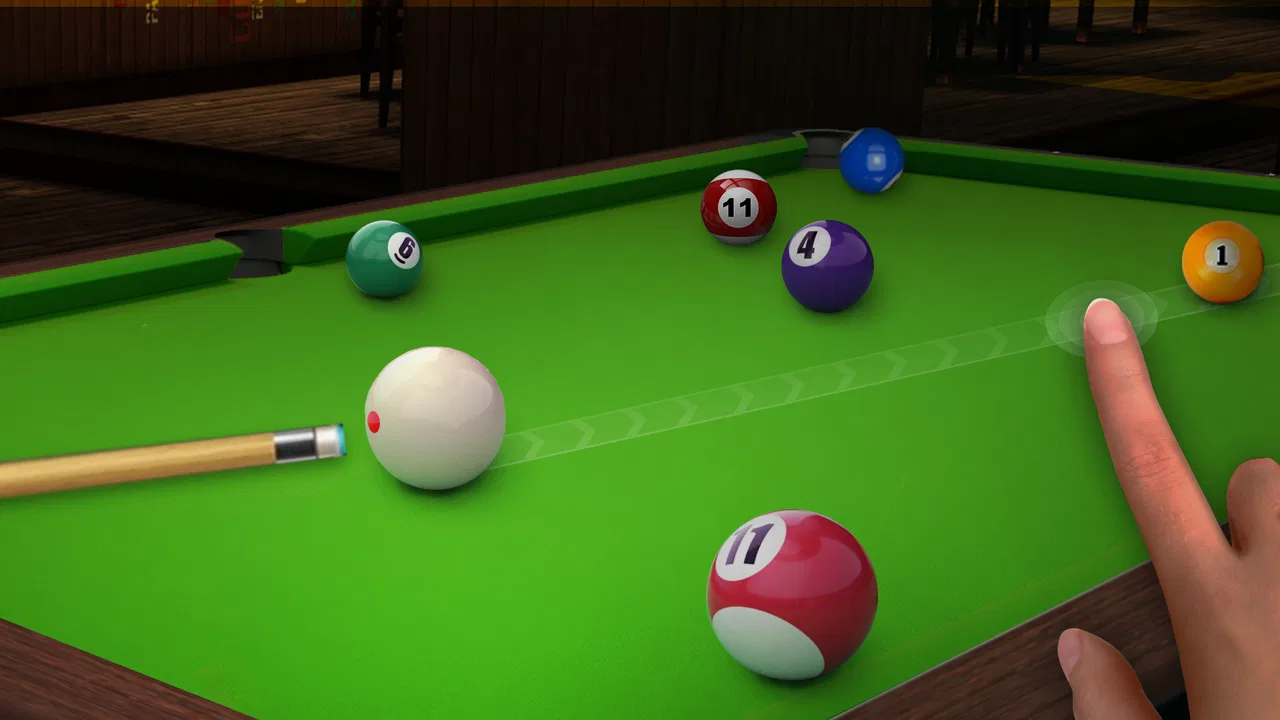
I spent time with Billiards City - 8 Ball Pool as a quick-play sports game, and my first impression was easy to understand: it is built around the simple pleasure of lining up a shot, judging the angle, and watching the balls react. It does not ask me to learn a complicated control system before I can enjoy a round. That makes it approachable when I want a short break, while the aiming itself gives the game enough room for practice.
Developed by Arbo Game, this free billiards title sits in a comfortable middle ground between a casual time-killer and a game that rewards patience. It is available to players rated Everyone, runs on Android starting with version 7.0, and has reached more than a million installs. Its average rating is 4.6 from around eleven thousand ratings, which matches my general feeling: the core idea is familiar, but the straightforward presentation makes it easy to return to.
How I play a normal session
My usual routine starts with a few deliberately simple shots rather than immediately trying to clear the table in one elegant run. I first check how sensitive the aiming feels on the particular phone I am using, then I take a moment to read the table. That small pause matters. Billiards City - 8 Ball Pool is much more enjoyable when I treat each shot as a decision instead of dragging the cue around at random.
You May Also Like

 Google Keep - Notes and lists
Google Keep’s Quiet Growth Shows the Appeal of Simpler Notes
As mobile work gets busier, Google Keep keeps winning a simple contest: capture a thought quickly, find it later, and get on with the day.

 Blood Strike: 2.5 Anniversary
Blood Strike’s Loadouts Turn Every Drop Into a Tactical Gamble
A close look at Blood Strike’s custom loadouts: how fast access to signature weapons reshapes its battle royale rhythm, rewards preparation, and narrows the gap between fights.

 Pandora - Music & Podcasts
Pandora’s Music Is Easy to Start, but Harder to Recover
Pandora’s strength is its low-effort path from a seed to a station. Its weak spot is how much confidence it asks you to place in connection, setup, and quiet recovery.

 8 Ball Pool
 Is Built on Rivalries, Rematches, and Routine
A close look at the rivalries, rematches, shared routines, and unanswered safety questions that turn a quick pool match into a persistent mobile community.

 Samsung Music
’s Quiet Strength Is Playing What You Already Own
Its reach comes less from spectacle than from dependable access to a personal library. That simplicity is both the app’s strongest retention engine and its ceiling.

 AccuWeather: Weather Radar
AccuWeather Review: A Quick, Clear Forecast for Everyday Decisions
For everyday plans, the best forecast is the one you can understand quickly. AccuWeather makes rain timing, radar, and local conditions easy to act on, with a few trade-offs.
More From Our News Desk



The basic workflow is uncomplicated. I line up the cue, consider the path of the target ball, and decide where I want the cue ball to finish. On an open table, the obvious pocket is not always the best choice. A slightly safer shot can leave a much better next position, especially when several balls are close together. The game becomes more interesting when I think one shot ahead rather than focusing only on the ball currently in front of me.
For a casual player, that is enough to make the game satisfying. I can pick it up, take a few shots, and stop without needing a long tutorial or a large time commitment. For a more experienced player, the same simplicity creates a useful challenge: because the controls are easy to understand, mistakes are usually easier to connect to poor aim, bad speed, or an overconfident choice.
My practical advice is to avoid rushing the cue into position. I make a rough alignment first, then adjust in smaller movements. This is especially helpful on a phone, where a large swipe can move farther than expected. If a shot looks technically possible but leaves no sensible follow-up, I consider it a warning rather than a challenge to force the attempt.
A useful habit for short play sessions
When I only have a few minutes, I use the opening shots to settle into the controls instead of trying to show off. I look for a ball with a generous pocket angle and use it to learn the current touch response. That makes the next shot more predictable. It also prevents the common mobile-game mistake of losing a turn because I started playing before my hands adjusted to the screen.
This routine works well during an everyday break. If I am waiting for an appointment or taking a short pause between tasks, I can play a handful of shots without committing to a long session. The game’s sports format is a good fit for that use because the objective is immediately readable. I do not need to remember a story, manage a large inventory, or rebuild progress before the game becomes interesting.
At the same time, I would not describe every session as equally deep. The appeal depends heavily on whether you enjoy the physical puzzle of pool. If you want a sports game with teams, seasons, detailed player development, or a strong competitive community, this is probably too focused. Its strength is the table itself, not a broad package of sports features.
Settings and phone setup worth checking
I recommend checking the available settings before settling into serious practice. I do not change options just because they exist; I look for anything that affects comfort, sound, or the way the game fits my phone. A quiet environment may make audio less important, while a noisy commute can make a silent session more practical. The best setup is the one that keeps attention on the shot rather than on distractions.
Screen size also changes the feel of aiming. On a smaller phone, I use shorter, more controlled finger movements and avoid covering the target line with my hand for too long. On a larger screen, I can make finer adjustments more comfortably, but I still try not to overcorrect. If the game feels inconsistent, I first check my touch habits and device orientation before blaming the shot system.
Keeping the game updated is sensible as well. The current version is 1.2.8, and I prefer to use the current release available for my device rather than judge the experience from an older installation. That is ordinary maintenance, but it can prevent confusion when controls or presentation feel different from what another player describes.
There is another setting-related trade-off worth considering: spending. The game is free to download, but in-app purchases are listed at $4.99 per item. I do not see that as a reason to avoid trying it, but I would decide in advance whether I want a completely no-spend experience. For me, the right approach is to treat the free version as the test. If the basic table play is not enjoyable, paying will not solve that problem.
Small adjustments that improve consistency
One of the most useful changes I made was separating aiming from power. I first choose the line, then think about how hard the shot needs to be. Combining both decisions in one hurried movement makes it easy to lose track of what went wrong. By handling them in sequence, I can tell whether a miss came from the angle or from the speed.
I also stopped treating every pocket as equally valuable. When two routes are available, I prefer the one that leaves the cue ball in open space. A successful shot that traps the cue ball behind another ball may be less useful than a slightly more conservative option. This is a transferable pool habit, but the game gives me a convenient place to practice it without the setup required for a real table.
Another practical tip is to use repeatable pre-shot checks. Before I commit, I ask myself three quick questions: where is the target ball going, where will the cue ball likely stop, and what is the safest next option? I do not need a long calculation. The value comes from using the same checklist every time, because it reduces impulsive shots and makes improvement easier to notice.
Faster patterns, harder choices, and the ceiling of the game
I find that faster play in Billiards City comes from spotting a reliable sequence, not from rushing every shot. In this section, I look at how to recognize patterns while still making room for careful choices when the table gets awkward. That distinction also helps clarify where the game’s focused billiards loop remains satisfying—and where its limited scope may start to feel like a ceiling.
Building quicker patterns without becoming careless
After a few sessions, I found that speed comes less from moving the cue faster and more from recognizing familiar layouts. When a ball has a clear pocket and the cue ball has room to travel, I can make the decision quickly. When the table is crowded, I slow down. This distinction keeps the game flowing without turning every turn into a rushed guess.
I like to group the table into simple priorities. First I look for balls that block other routes. Then I consider balls that are easy to pocket but leave awkward angles afterward. Finally, I deal with the shots that require more precise positioning. This order is not a guaranteed solution for every layout, but it gives me a repeatable way to avoid wasting the easiest opportunities.
Experienced players will probably appreciate that the game rewards this kind of routine more than random experimentation. I can improve by reviewing why a sequence failed: perhaps I chose a pocket that narrowed the next angle, used too much force, or ignored a ball that was about to become a problem. That makes repeat sessions feel purposeful even when the presentation remains simple.
There is a trade-off here. The faster I try to play, the more likely I am to rely on visual guesses. That can be fine for an easy opening, but it becomes costly when the cue ball needs to finish in a particular area. My best results come from alternating quick recognition with a deliberate pause before difficult shots.
Where the challenge becomes more technical
The game’s technical side appears when I need to control the cue ball rather than merely pocket the object ball. A shot can look perfect from the target ball’s perspective and still create a poor position afterward. I pay attention to the direction the cue ball will take and avoid using excessive power unless the table clearly demands it.
Angles near the cushion deserve extra caution. They leave less room for error, and a small aiming mistake can change the entire result. When I face one, I focus on the contact point and choose a calmer stroke. I would rather accept a slower, safer sequence than repeatedly attempt a dramatic shot that only works when everything is exact.
One non-obvious benefit of practicing these situations is that the game helps me understand my own decision-making. I tend to overestimate difficult shots when I am trying to finish quickly. Seeing that pattern has encouraged me to choose higher-percentage routes. That is a modest lesson, but it is exactly the kind of useful feedback a casual sports game can provide when I play attentively.
What the game does not replace
Billiards City - 8 Ball Pool is not a substitute for a full pool simulator if I want deep realism, extensive rule options, or a detailed multiplayer structure. Its appeal is narrower and more immediate. I would choose it over a larger alternative when I want fast access to billiards practice, but I would choose a more feature-heavy option when I want a long-term competitive system or a richer recreation of a real club environment.
That distinction also matters for social players. If the main reason I play pool is to compete directly with friends, I would first check whether this particular experience offers the kind of match structure I want. The verified store details identify it as a billiards game, but they do not turn it into a complete social platform. I would not install it expecting a broad community experience without confirming that the current version suits that purpose.
The same caution applies to players who dislike repetition. The core loop is intentionally focused: aim, shoot, assess the result, and repeat. That focus is satisfying when I enjoy refining small decisions, but it may feel limited if I need constant new mechanics. The game is best for someone who sees improvement in cleaner shots as a reward in itself.
Who should install it
I think it is a good match for casual sports fans, people learning the basic logic of pool shots, and players who want something they can open without preparation. The Everyone rating makes it suitable for a broad audience, while the free entry point removes much of the risk of trying it. The large install base also suggests that it has found an audience beyond a tiny niche, although popularity alone should not decide whether its focused style suits you.
I would be more selective if I were recommending it to a serious pool enthusiast. It can support practice in aiming discipline and shot planning, but a phone screen cannot reproduce every physical detail of a real table. It is also not the right first choice for someone whose priority is a deep career mode, formal competition, or a large collection of sports activities.
My final view after repeated sessions
Arbo Game has kept the central idea clear: the enjoyment comes from making a good shot and learning from a bad one. I value that clarity. The game does not need a complicated routine to become playable, and its short-session format makes it easy to fit into ordinary downtime. The most rewarding way to use it is not to chase every shot at maximum speed, but to build a consistent process around alignment, power, and the next position.
There are limits, particularly for players who expect a broad competitive package or a highly detailed simulation. The free-to-play format also deserves a little attention, since individual in-app purchases cost $4.99. Still, those points do not undermine the basic experience for me. I can try the game without paying, decide whether the focused billiards loop holds my attention, and then keep playing within my own boundaries.
My recommendation is straightforward: install it if you want an accessible billiards game that rewards repeatable habits and careful choices. Start with controlled shots, check the settings that affect comfort, and use each turn to practice planning rather than simply chasing the nearest pocket. The real strength is its approachable path from casual tapping to more thoughtful shot selection. For me, that makes Billiards City - 8 Ball Pool a worthwhile free sports game, provided I accept that its mastery comes from refining one compact idea instead of discovering a large collection of systems.
FAQs for Billiards City - 8 Ball Pool
01What are the main features of Billiards City - 8 Ball Pool?
Billiards City - 8 Ball Pool offers a realistic pool-playing experience with stunning graphics and smooth gameplay. It features single-player mode, various levels of difficulty, and different tables to unlock. The game is designed for both beginners and pros, providing a range of challenges to keep players engaged.
02Is Billiards City - 8 Ball Pool free to play?
Yes, Billiards City - 8 Ball Pool is free to download and play. However, it contains in-app purchases that can enhance gameplay, such as purchasing additional cues or unlocking premium features. Players can enjoy the core game without spending money, though optional purchases can provide additional benefits.
03Does Billiards City require an internet connection?
No, Billiards City - 8 Ball Pool does not require an internet connection for its single-player mode. This makes it ideal for players who want to enjoy the game offline. However, some features, updates, or in-app purchases might require connectivity to access fully.
04Are there any ads in Billiards City - 8 Ball Pool?
Yes, Billiards City - 8 Ball Pool includes ads as part of its free-to-play model. These ads help support the developers and keep the game free for users. The frequency and type of ads can vary, and players can opt for in-app purchases to remove them if desired.
05Can I customize my pool cue in Billiards City?
Yes, players can customize their pool cues in Billiards City - 8 Ball Pool. The game offers a variety of cues that players can unlock or purchase. Each cue can have different attributes such as power or accuracy, allowing players to tailor their gameplay experience to their preferences.
Pros
- Realistic physics enhance gameplay immersion.
- Stunning graphics with vibrant pool table designs.
- Progressive difficulty keeps the game challenging.
- Intuitive controls make it easy for beginners.
- No internet connection required for solo play.
Cons
- Limited customization options for cues and tables.
- Ads can be intrusive during gameplay.
- No multiplayer mode for online competition.
- Repetitive music may become tedious over time.
- In-app purchases can be costly.

Billiards City - 8 Ball Pool
Gallery